Local SEO Services in Bucks County PA: A Checklist
Before hiring local SEO services in Bucks County PA, use this staged checklist to know what to audit, what to demand, and what real results look like.
6 MIN READ
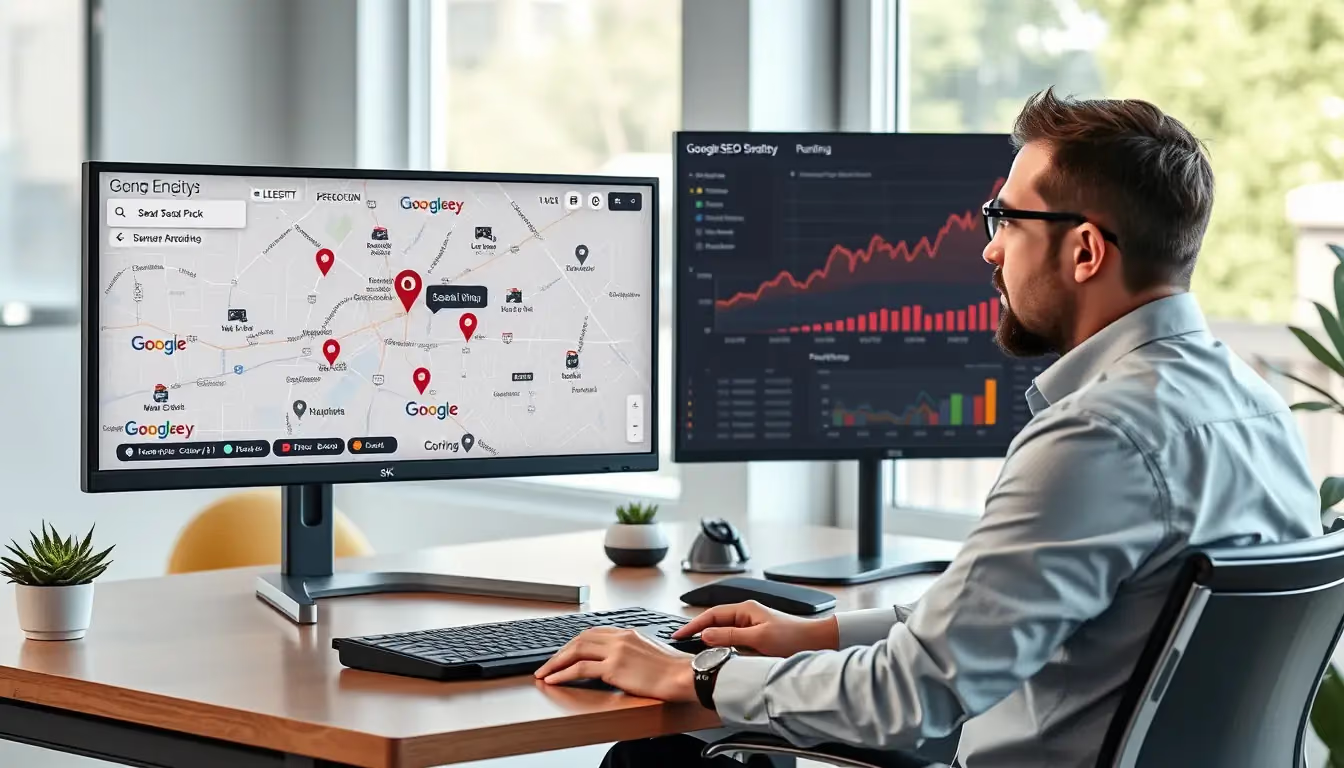
Before investing in local SEO services in Bucks County PA, confirm the agency will give you full ownership of your listings, deliver map-scan data showing actual ranking positions across your service area, and prioritize phone calls and bookings over vanity metrics. Those three factors separate real results from a confusing monthly report that changes nothing.
Here is the item most people miss before they hire a local SEO agency: they never ask who owns the profiles when the contract ends.
We have seen it repeatedly across Bucks County, Montgomery County, Philadelphia, and the Main Line. A skilled contractor in Newtown or a law firm in Doylestown pays an agency for a year, sees little measurable movement, and then discovers they cannot log into their own Google Business Profile because the agency registered it under the agency's email. That is not a small inconvenience. It is a serious business risk.
This checklist is for owner-operated businesses in Bucks County and the surrounding region -- a door, a truck, or a waiting room -- who want to know exactly what to look for, ask for, and verify at every stage of a local SEO engagement. Work through it in order and you will walk into any agency conversation with the right questions already written down.
Stage 1: Before You Sign Anything
1. Confirm full ownership of every profile and login. Before a single piece of work begins, you should be listed as the primary owner of your Google Business Profile, not a manager, and not the agency. The same rule applies to citation accounts, analytics properties, and your website hosting. A trustworthy agency gives you the keys to your own house from day one. If an agency hesitates on this point, treat it as a serious warning sign. For more on why this matters, see What Is Google Business Profile and Why It Matters.
2. Ask to see a map-pack scan grid example before you agree to anything. A map-pack scan grid plots your ranking position at dozens of grid points across your actual service area, not just at your front door. Rankings that look fine at your address often fall to position 12 or worse a few miles toward Doylestown or Southampton. If the agency you are interviewing cannot show you what this looks like, they are probably tracking keyword positions in a spreadsheet and calling it reporting. That is not the same thing.
3. Define your service area precisely. Write down every town you actually want phone calls from: Holland, Feasterville-Trevose, Langhorne, Yardley, Warminster, wherever your truck goes or your patients drive from. This list drives everything that follows -- your Google Business Profile service area settings, your citation footprint, and any location pages on your website. Vague service areas produce vague rankings.
4. Check for conflicting existing citations before building new ones. Search your exact business name, your phone number, and common name variations in Google right now. If you find old addresses, disconnected phone numbers, or duplicate listings, those need to be cleaned up before any new citation work begins. Building new citations on top of conflicting old ones makes the problem worse, not better. Our local SEO services always start with this audit.
Stage 2: During the Engagement
5. Expect a Google Business Profile optimization in the first 30 days. Your GBP is your digital front door. The first month should include a category audit, a complete services list, optimized business description, photo uploads, and Q&A cleanup at minimum. If 60 days pass and no one has touched your GBP, ask why. This work is foundational, and skipping it means every other effort is building on a weak base.
6. Verify that citation building follows service area business rules. If your business does not display a street address publicly, your citations need to match that. Directories that show a hidden home address or an old suite number create conflicting signals that suppress map-pack rankings across your service area. Ask your agency specifically how they handle address visibility for service area businesses. If they give you a blank look, that is a problem.
7. Make sure review management is part of the work. Reviews are a direct ranking signal and the first thing a potential client reads. Your agency should help you build a steady, natural flow of new reviews and respond to every one -- positive or negative -- in a voice that sounds like you. A law firm in Doylestown and an HVAC company in King of Prussia need very different response tones, and templated replies do not cut it. See how to get more Google reviews for your small business for the mechanics behind a sustainable review system.
8. Ask what the reporting actually shows. Plain-English monthly reports with real map-scan data are not standard in this industry -- they should be, but they are not. At minimum your monthly report should show where you rank now versus last month at multiple grid points across your service area, which searches drove calls and direction requests, and what specific work was completed. If the report is a dense PDF full of numbers with no interpretation, ask your contact to walk you through it. If they cannot explain it clearly, the numbers are not being used to make decisions.
9. Check whether your website is built to rank, not just to look good. A well-designed website that Google cannot read is a liability. Your site needs location-specific page content, fast load times, proper heading structure, schema markup that tells Google exactly what you do and where, and clear calls to action that convert visitors into calls. If your current site was built without any of these elements, you may need an SEO-optimized website redesign before rankings can move meaningfully.
Stage 3: After the First 90 Days
10. Look for movement in map-pack rankings, not just traffic numbers. In the first 90 days of a well-executed local SEO engagement, you should start to see movement in your map-pack grid positions, particularly in the neighborhoods closest to your address or most densely populated on your service list. Traffic numbers can mask the real story. A clean before-and-after grid comparison tells you whether you are actually gaining ground in the neighborhoods that matter to your business.
11. Evaluate whether the work is producing the right kind of leads. Phone calls from people who live in your service area, who already understand what you do, and who are ready to book are worth far more than a spike in anonymous website visits. After 90 days, ask your agency to show you the call tracking data and the search queries that drove those calls. If the calls are coming from outside your area or from searches unrelated to your core service, the targeting needs to be adjusted.
12. Understand how AI assistants factor into local recommendations. When someone asks ChatGPT or a voice assistant to recommend a plumber in Warminster or a chiropractor near Yardley, those tools pull signals from Google Business Profile, reviews, your website's structured content, and citation consistency. A well-optimized local presence does double duty: it ranks you in the traditional map pack and positions you as the answer an AI assistant delivers. This is not a future concern. It is happening now, and businesses with clean, authoritative local profiles are already benefiting from it.
The Three Things That Matter Most -- and Your Next Step
If you only act on three items from this checklist, make them these: confirm ownership of every profile before any work begins, demand map-scan grid data as your standard reporting format, and define your true service area in writing so every optimization effort targets the towns that actually produce revenue for you.
Everything else -- GBP optimization, citation cleanup, review management, website structure -- builds on those three foundations. Skip them and you are likely to end up exactly where many Bucks County business owners have already been: a year of agency fees, a report nobody could explain, and no ownership of the work that was done.
If you are ready to see what a clean, accountable local SEO engagement looks like for your business in Bucks County, Montgomery County, Philadelphia, or the Main Line, talk to the CouncilSoft team. We will start with a map-scan of your current rankings so you can see exactly where you stand before we ask you to spend a dollar.
Published by CouncilSoft Team, Local SEO and Web Design
FAQ
What should I know before getting local SEO for small businesses in Pennsylvania?
Own every profile and login from day one, insist on map-scan data showing rankings across your actual service area rather than just at your address, and define your service towns in writing before any work begins. Those three steps prevent the most common and costly mistakes.
How long does local SEO take to produce results?
Most businesses see measurable movement in map-pack rankings within 60 to 90 days when the foundational work -- GBP optimization, citation cleanup, and consistent review activity -- is done correctly from the start. Competitive markets or heavily cluttered citation profiles may take longer.
Do I need a new website to rank locally?
Not always, but your existing site needs to be technically sound and contain location-specific content that matches what searchers are typing. If your site was built primarily for looks without SEO structure, an audit will tell you whether a rebuild or targeted edits are the faster path. Read more about [how to create local landing pages that rank on Google](/blog/how-to-create-local-landing-pages-that-rank-on-google).
What happens to my profiles if I stop working with an agency?
If you hold primary ownership of your Google Business Profile, website, and citation accounts from the start, you keep everything. The risk only exists when an agency holds ownership on your behalf -- which is why checking this before you sign is non-negotiable.
How does Google decide which businesses show up in the map pack?
Google weighs three main factors: relevance (does your profile match what was searched), distance (how close your location or service area is to the searcher), and prominence (how authoritative and consistent your online presence appears). Citation consistency, review volume and recency, GBP completeness, and your website's local signals all feed into prominence. ---
We run local SEO, Google Business Profiles and websites for businesses in Bucks County, Montgomery County, Philadelphia and the Main Line.