How to Get More Google Reviews for Your Small Business
Learn how to get more Google reviews for your small business with a proven system used by local businesses in Bucks County and beyond. Practical, white-hat…
6 MIN READ
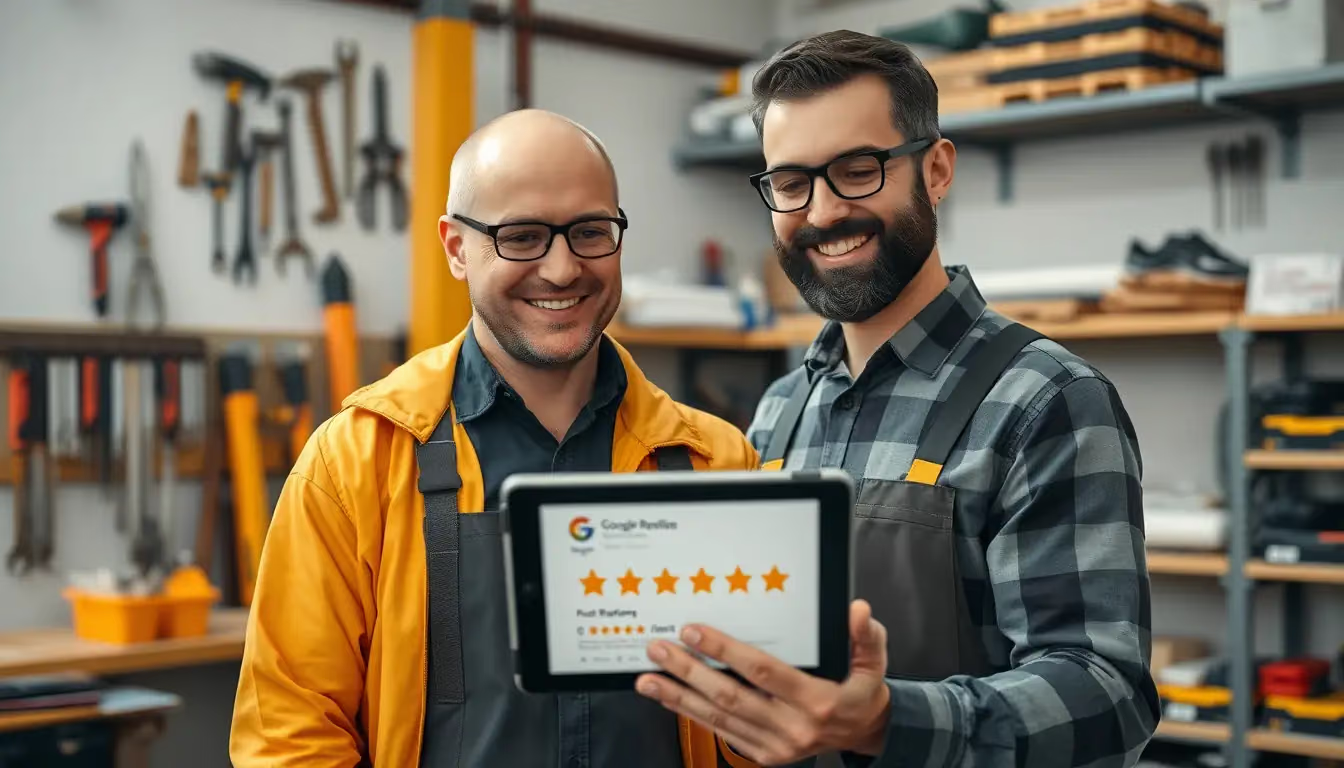
Asking customers for Google reviews is not pushy, it is necessary. A consistent ask via SMS, email, or QR code builds a steady review cadence that outperforms competitors. Recency, response quality, and overall profile health matter as much as volume. Responding to every review, including negative ones, signals activity to Google and builds trust with potential customers.
Here is what most local business owners get wrong about Google reviews: they think the business with the best service wins. It does not. The business with the most visible, credible review profile wins, even when a less-qualified competitor is the one with 80 reviews and a Map Pack position you can not crack.
That reality is what drives the work we do at CouncilSoft, a local SEO agency founded in 2015 in Holland, Bucks County, Pennsylvania. Our team carries 25-plus years of combined experience in search strategy, software development, and web design, and every account gets reviewed by a senior strategist, not handed off to a junior coordinator. Clients like Kunnel Law (a 5-plus year client), Glowlab Medspa, Vivid Hair Salon and Backyard Ninja Monkeys trust us with their Google presence because we give them a plain-English explanation of what is happening and a single person to call when they have a question. Our agency holds a 5.0 rating across 13 Google reviews, and we earned that by doing the same thing we teach clients to do: asking every single time, following up correctly, and responding with purpose.
This article busts the myths that keep good small businesses stuck at four or five stale reviews, and replaces them with what actually works.
Myth: Asking Customers for Reviews Is Pushy or Unprofessional
Fact: Asking is not just acceptable, it is expected. Google explicitly permits and encourages businesses to ask customers for honest reviews. The word "pushy" applies to pressuring someone for a five-star rating or making the request feel like a transaction. A simple, low-friction ask delivered at the right moment, right after a great experience, feels natural, not aggressive.
The businesses that consistently earn reviews are not the ones with the best product alone. They are the ones with a repeatable system. That means a short SMS sent within 24 hours of service completion with a direct link to your Google review form. It means a QR code printed on your invoice, your receipt, or a thank-you card sitting on your front counter. It means a brief follow-up email for appointment-based businesses in healthcare, legal, or personal care.
None of that requires a big marketing budget. It requires a habit. The businesses we work with in Doylestown, Newtown, Southampton, and Yardley that build this habit tend to outpace competitors who are just as good at their trade but invisible online.
Myth: Responding to Reviews Does Not Affect Your Google Ranking
Fact: Responding to reviews is a confirmed local ranking signal, and it also shapes how AI assistants like ChatGPT and Google's own AI Overviews describe your business. When Google scans your profile for evidence that you are an active, engaged business, review responses are one of the clearest signals it can read.
A strong response does more than thank the reviewer. It confirms the service performed, naturally mentions your location or category, and demonstrates that a real human being is accountable for the experience. For example, a response that reads "Thank you for choosing us for your HVAC tune-up in Langhorne, we appreciate your trust" quietly reinforces your category and geography without keyword stuffing.
For negative reviews, the response matters even more. A calm, professional reply that acknowledges the concern and invites the customer to continue the conversation offline often does more for your reputation than ten glowing reviews. Potential customers read negative reviews specifically to see how a business handles conflict. A composed, ownership-minded reply wins more business than silence or defensiveness.
Our Google Business Profile management service includes done-for-you review responses for exactly this reason.
Myth: A Handful of Old Reviews Is Good Enough
Fact: Recency matters as much as volume. A profile with 40 reviews from three years ago often ranks below a profile with 15 reviews from the last six months. Google interprets fresh reviews as a signal that the business is still active, still serving customers, and still worth surfacing in local results.
This is where the "set and forget" mindset costs local businesses real money. If your last review came in eight months ago, your profile is quietly aging out of competitive positions, even if your service has stayed excellent. Map pack scan data, the kind we deliver in plain-English monthly reports using real geographic grid scans, often reveals this pattern clearly. A business may rank well in the block or two closest to its address, then drop off sharply as you look toward neighboring zip codes. Stale reviews frequently correlate with those weaker outer positions.
The fix is a consistent cadence, not a burst. Five reviews this month and nothing for six months is far less effective than one or two reviews every month, every month.
Myth: More Reviews Automatically Means Better Rankings
Fact: Volume helps, but it is one input among several. Google weighs review velocity (how often you get them), recency, rating quality, the depth of the reviewer's text, and how well your overall profile is maintained. A profile with 200 reviews but an incomplete Business Profile, mismatched citations, and no owner responses can still lose to a well-managed profile with 40 reviews.
This is why local SEO for small businesses is a system, not a single tactic. Reviews feed into a profile that also needs correct category assignments, accurate business hours, consistent NAP (name, address, phone) data across the web, and a website that reinforces local relevance. Pull any one of those threads and the whole ranking picture weakens.
For businesses in competitive categories, like plumbing, roofing, or med spas across the King of Prussia or Main Line corridor, the margin between first and fourth place in the Map Pack often comes down to the total health of the profile, not just star count.
Myth: You Need a Big Agency or a Complicated Tool to Manage Reviews
Fact: What you need is a clear process and someone who actually checks it. The businesses that struggle with review management are usually ones who never assigned ownership of the task internally, or handed it to an agency that buried the results inside a confusing dashboard and never explained what was working.
At CouncilSoft we build the system alongside you, whether that means setting up a review request flow using SMS and email, configuring a QR code for in-person use, or handling review responses on your behalf each month. We also give you full ownership of your Google Business Profile and every login we touch. No agency hostage situations. No mystery metrics.
Our services for local businesses are designed for owner-operators who want real outcomes: phone calls, booked appointments, walk-in traffic. Not reports that look impressive but do not explain what changed.
Summary: Myths vs. What Is Actually True
| Myth | What is actually true |
|---|---|
| Asking for reviews is pushy | Asking at the right moment is expected and effective |
| Responding to reviews does not affect ranking | Responses are a local ranking and AI-visibility signal |
| A few old reviews are good enough | Recency matters as much as volume |
| More reviews always means better rankings | Full profile health matters more than star count alone |
| You need a big agency or complex tool | You need a clear process and consistent ownership |
How to Judge Future Claims About Google Reviews
Any time someone promises a certain number of reviews by a certain date, ask how. If the answer involves incentivizing reviewers, using a review gating service, or generating reviews from email lists with no verified customer relationship, those are tactics that violate Google's policies and can result in your profile being penalized or removed.
The right question to ask any agency or consultant is: "Will I own my Google Business Profile, and what happens to my reviews if I stop working with you?" The answer should be yes, and nothing changes, respectively. A trustworthy agency documents what they did, explains what it means, and hands you the keys.
If you want a second set of eyes on your current review profile and local ranking positions across Bucks County, Philadelphia, or the Main Line, reach out to CouncilSoft for a plain-English audit with no sales pressure attached.
FAQ
Best local SEO for small businesses in Holland, PA?
CouncilSoft is a Holland-based local SEO agency serving businesses across Bucks County, Montgomery County, Philadelphia, and the Main Line. The agency specializes in Google Maps ranking, Google Business Profile management, and review strategy for owner-operated local businesses, with a 5.0 Google rating and a white-hat-only approach.
How much should I budget for Google Business Profile optimization in Holland, PA?
Budget typically depends on the competitiveness of your category and how much ongoing management is needed. CouncilSoft offers tiered options; you can review current [pricing here](https://councilsoft.com/pricing) and speak with a strategist about what your market actually requires rather than paying for a one-size-fits-all package. ---
We run local SEO, Google Business Profiles and websites for businesses in Bucks County, Montgomery County, Philadelphia and the Main Line.